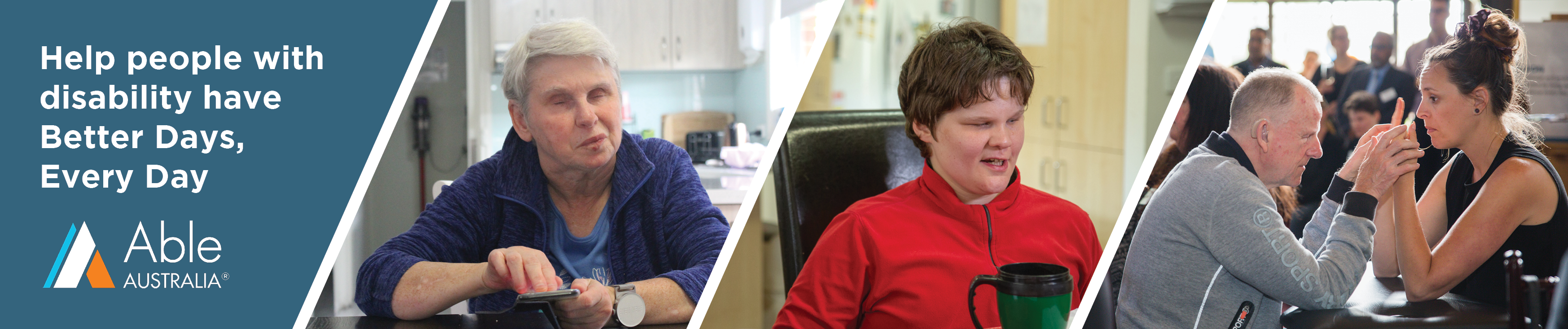
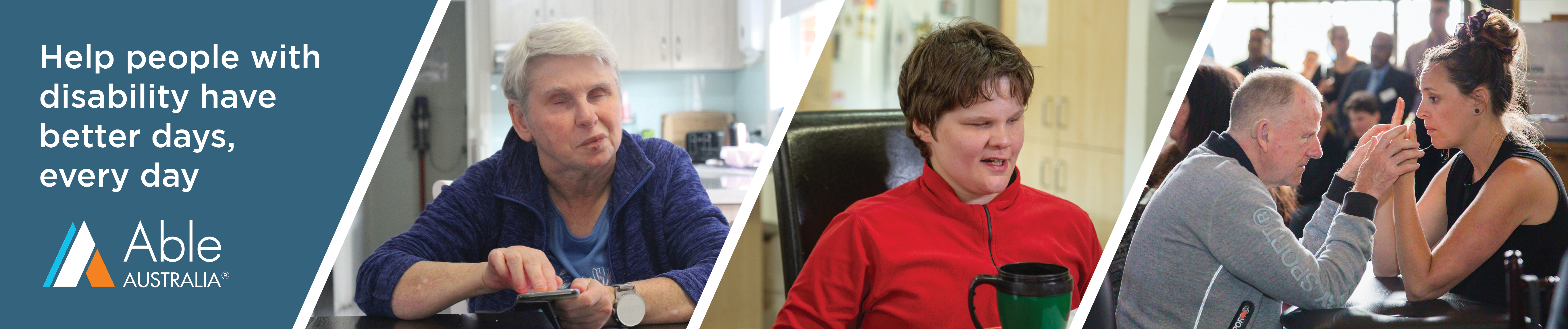
Think about what it would be like to walk outside and be unable to see the footpath or hear what’s happening on the street. Imagine going shopping or to the doctor and not being able to communicate. That’s the reality for over 100,000 Australians who are deafblind.
Deafblindness is such an isolating disability because it is a combination of both hearing and vision impairment. Deafblindness has a significant effect on daily living. But with the right support, people who are deafblind can find connection, confidence, and joy again.
Sally*, who is deafblind, experiences the world like this every day. Sally was born Deaf and learned sign language as a child. Her vision deteriorated due to Usher’s Syndrome, and she has been deafblind from the age of 28. “Losing my sight was frightening,” Sally shares. “I suddenly had no confidence. I live in a dark and silent world.”
With support from Able Australia, Sally began to reconnect with the world. Over the past 30 years, she has learned to use a white cane, enjoyed making friends at Able’s deafblind camps, learned braille and tactile Auslan, grown confidence, and now travels independently.
*Name changed for anonymity
“Able’s deafblind services provide my Communication Guides for shopping, going swimming, they help me to communicate with people who don’t sign. My mental health would decline without them.
I’d be unable to go out in the community.” says Sally.